LATEST ARTICLES

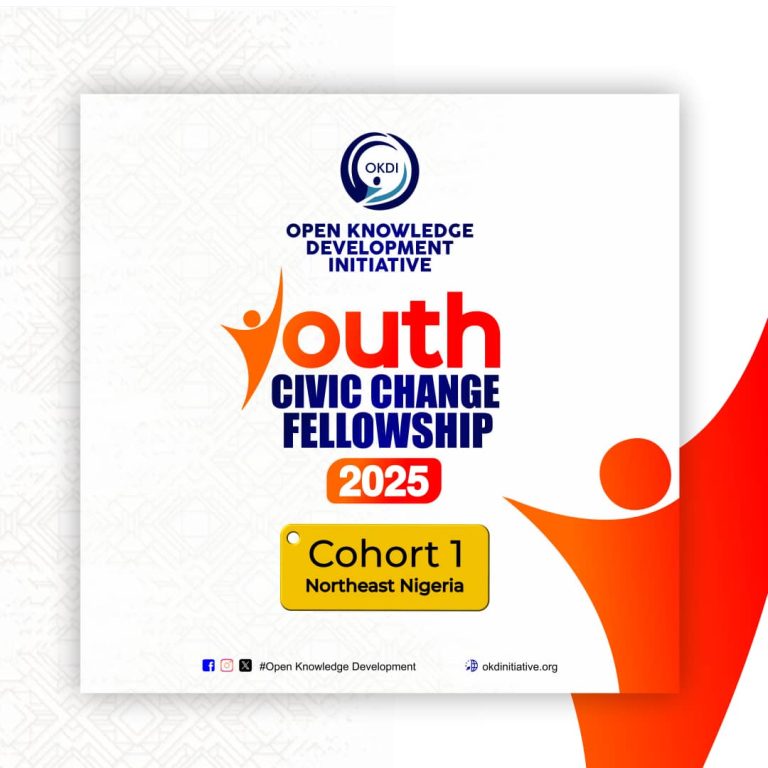
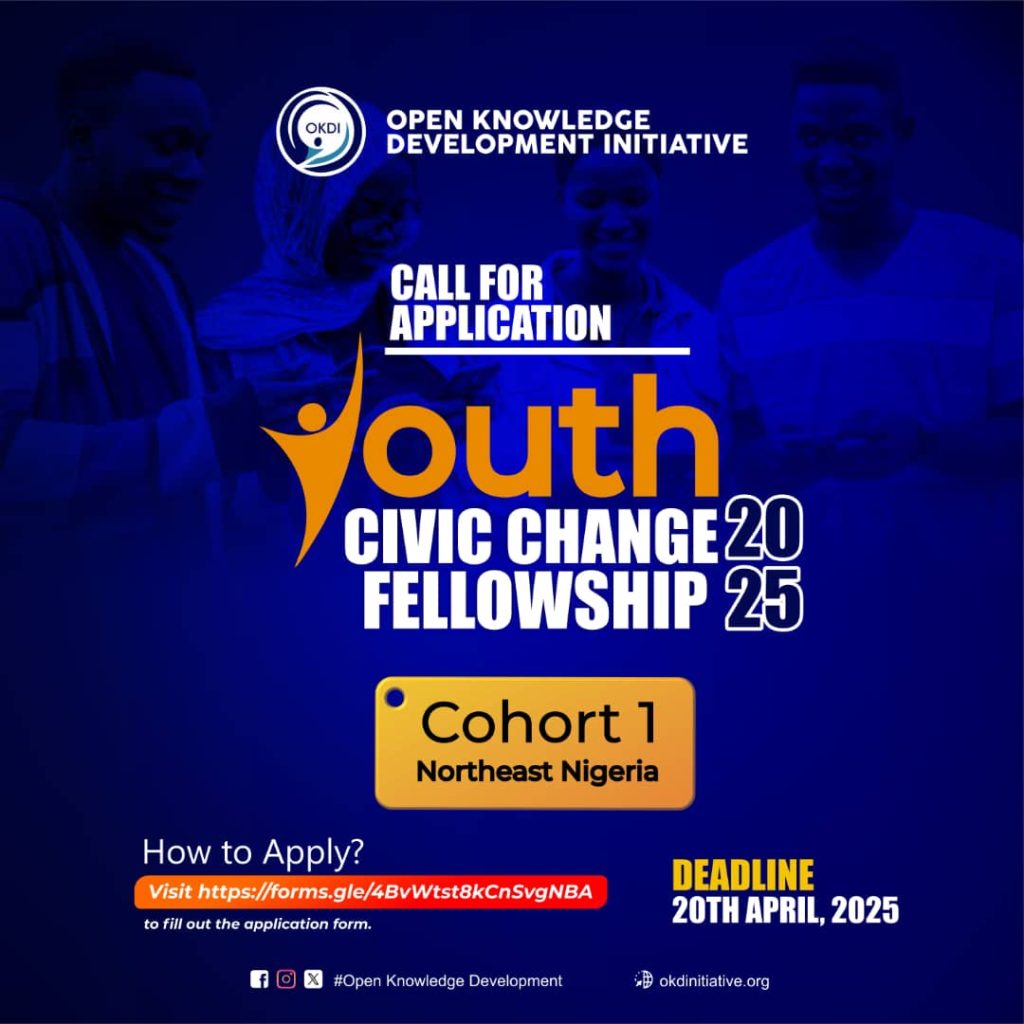
Call for Applications: YOUTH CIVIC CHANGE FELLOWSHIP 2025

Are you a young changemaker passionate about civic engagement and community transformation? Do you want to strengthen your leadership skills, drive impactful initiatives, and protect civic space in your community?

The Open Knowledge Development Initiative (OKDI) is thrilled to launch the Youth Civic Change Fellowship 2025 — a dynamic and transformative program designed to equip emerging civic leaders from rural and youth-led organizations in Africa with the tools, skills, and networks they need to create lasting change. Successful and certified fellows will join the organization’s Youth Civic Change Alliance (YCCA).

The fellowship is open to young civic changemakers and activists from across Africa. The program will be implemented in cohorts, with the first cohort targeting youth changemakers in Northeastern Nigeria.

WHO CAN APPLY?
We’re looking for passionate youth who:
1.Are between 15–35 years old

  1. Are actively involved in a youth-led or community-based organization/network
  2. Have a proven track record of civic engagement, advocacy, or community action
  3. Are based in or working within Northeastern Nigeria
  4. Can train and cascade knowledge to their teams or communities

WHAT YOU’LL GAIN:
Practical training in:

  1. Civic engagement and participatory governance
  2. Policy advocacy
  3. Fundraising and resource mobilization
  4. Organizational strengthening and governance
  5. Mentorship from seasoned civic leaders
  6. Opportunity to design and implement your own civic project
  7. Certificate of Completion
  8. Access to the Youth Civic Change Alliance (YCCA) — a regional network of changemakers

Cohort 1 Target Region: Northeastern Nigeria

Application Deadline: 20th April, 2025

Submit your application below

For inquiries, partnerships, or more information, contact us at okdinitiative@gmail.com / info@okdinitiative.org
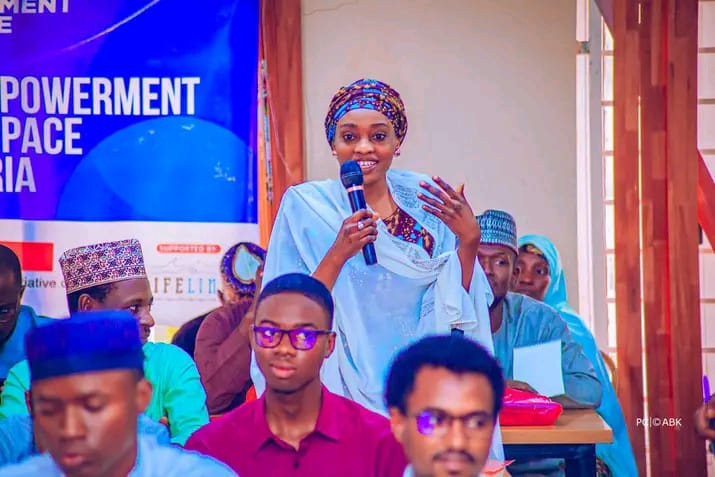
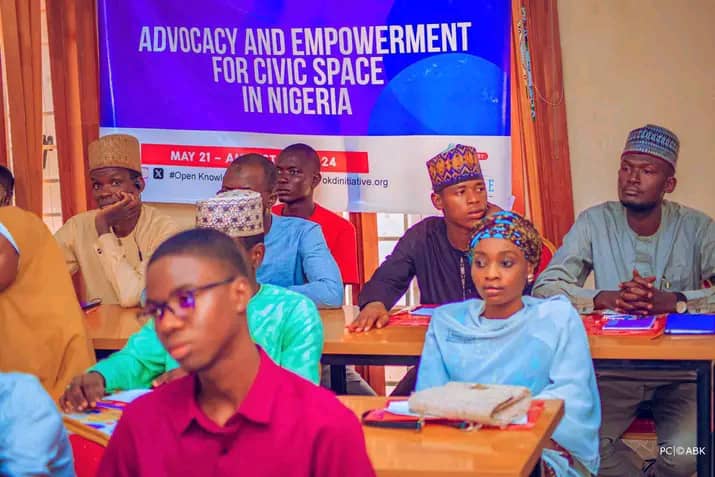
Advocacy and Empowerment for Civic Space: Strengthening Freedom of Assembly and Association in Nigeria

In response to increasing threats to the rights of Freedom of Assembly and Association (FoAA) in Nigeria, the Open Knowledge Development Initiative, in partnership with Life Line, organized a six-month project from March to August 2024. This initiative aimed to safeguard these fundamental freedoms and strengthen advocacy efforts across the country. Through targeted engagement with grassroots movements, civil society organizations, policymakers, and the general public, the project successfully amplified voices demanding reforms and legal protections.

Key Activities and Achievements

  1. Workshops on Legal Mechanisms and Communication Strategies for Advocacy

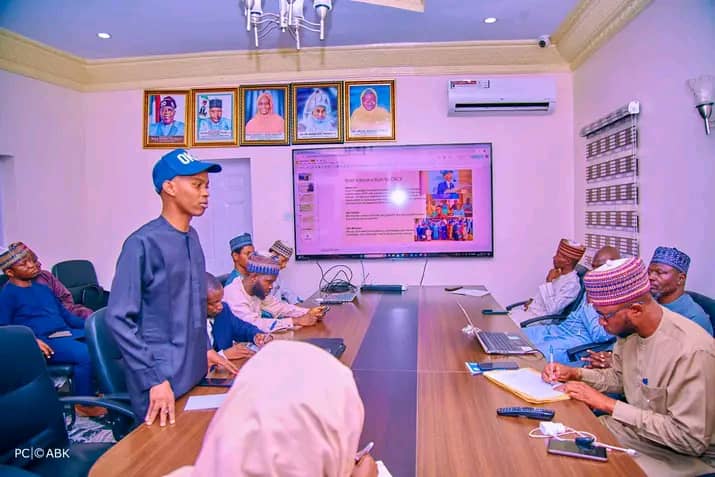
The project conducted stakeholder workshops designed to enhance legal knowledge of FoAA and develop effective communication strategies. Attended by key figures, including the branch Chairman of the Nigerian Bar Association, civil society leaders, and government representatives, these workshops provided a platform for education and discussion. The sessions were widely covered by Africa Independent Television, further amplifying the project’s message.

  1. Media Campaign and Communication Strategy Manual

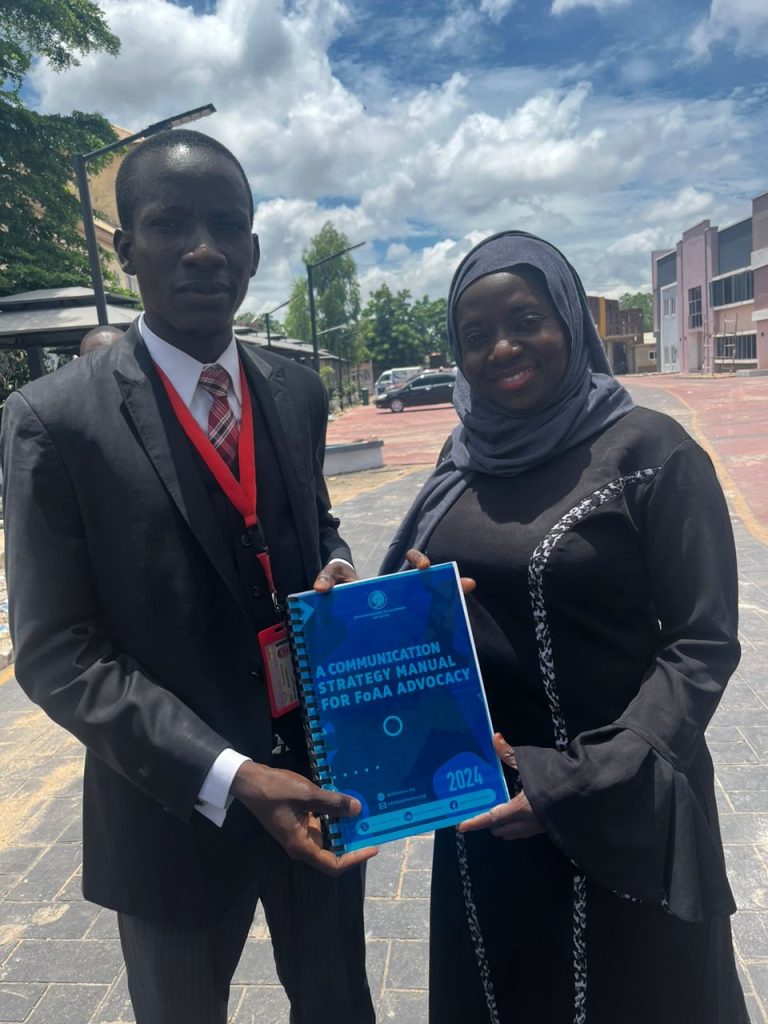
A dynamic media campaign was executed, engaging thousands of individuals, particularly through the use of local languages to maximize reach. As part of this effort, a comprehensive Communication Strategy Manual was developed. This manual serves as a practical guide for FoAA advocacy and will continue to be a vital resource for civil society organizations and activists across Nigeria.

  1. Research Paper on Freedom of Assembly and Association (FoAA)

A well-researched and in-depth paper analyzing the status of FoAA in Nigeria was published. This document explores existing legal frameworks, highlights recent developments, and identifies challenges faced by civil society organizations and human rights defenders. Additionally, it offers strategic recommendations for strengthening FoAA protections.

  1. Multi-Stakeholder Advocacy Meetings

Advocacy meetings were held with key policymakers, civil society organizations, government authorities, and legislators, igniting interest and discussions around safeguarding FoAA. High-level engagements included dialogues with the Solicitor General, a Magistrate Judge, and the Nigerian Bar Association—an influential legal body. Moreover, reputable organizations such as AGILE and prominent legislators actively participated in these discussions.

Impact and Future Directions

The Advocacy and Empowerment for Civic Space project has made significant strides in raising awareness, enhancing legal knowledge, and mobilizing support for democratic freedoms. By equipping stakeholders with the tools and knowledge necessary for effective advocacy, the initiative has strengthened the resilience of civil society in Nigeria. Looking ahead, sustained engagement with policymakers, continuous awareness campaigns, and grassroots mobilization will be crucial in ensuring that the right to freedom of assembly and association remains protected.

This project marks a vital step towards reinforcing civic space in Nigeria, ensuring that advocacy for fundamental freedoms continues to thrive in the face of challenges. Open Knowledge Development Initiative and Life Line remain committed to empowering individuals and organizations to champion democracy and human rights.

Conclusion

The success of the Advocacy and Empowerment for Civic Space project demonstrates the power of collaboration in defending democratic rights. By uniting grassroots organizations, legal professionals, and policymakers, this initiative has laid the foundation for long-term advocacy and policy reforms. Moving forward, continued efforts are needed to sustain this momentum and push for the protection of FoAA in Nigeria. Open Knowledge Development Initiative and Life Line encourage all stakeholders to remain engaged, informed, and proactive in the fight for civic freedoms. Together, we can build a more inclusive and democratic society.

History of Open Knowledge Development Initiative

The Open Knowledge Development Initiative was created in 2020 as a mentoring hub in Nigeria, focused on nurturing the capabilities of local communities and youths in the northeast region. Its core objective was to empower Nigerian youth through capacity-building sessions operating under the banner of “Jewel Platform.”

The inaugural phase of this initiative unfolded in Gombe, backed by funding from the Center for Information Technology and Development as the principal sponsor. With their backing, a workshop was organized to train 100 Gombe youths on leveraging creativity for societal progress. The workshop was conducted at the National Library of Gombe. Additionally, Applied Worldwide, a US-based content production company where our Executive Director served as the Director of African Operations, significantly contributed to the program’s success. They generously supported the training by covering the cost of books, aiding young African talents to amplify their voices on the company’s digital platform with substantial financial support.

Expanding its reach, the capacity-building initiative extended to Bauchi, benefitting over 100 participants. The program materialized through the generous sponsorship of the Center for Information Technology and Development in collaboration with the American Corner Bauchi, serving as the venue. As the initiative evolved, it morphed into the nonprofit entity “Open Knowledge Development,” broadening its focus.

This new trajectory facilitated the empowerment of communities by equipping them with knowledge, tools, resources, and platforms. These endeavors aimed to bolster accountability in governance, foster sustainable growth, and engender empowerment across various sectors: digital literacy, peacebuilding, gender equality, accountability, technology, and environmental conservation.

Thanks to funding from the Wikimedia Foundation, the nonprofit arm behind Wikipedia, more than 500 youths in Nigeria’s northeastern region underwent training in digital literacy. Notably, projects were executed across multiple federal government institutions like the Federal University of Kashere, Federal Polytechnic Kaltungo, and Federal Horticulture Dadin Kowa. Similar projects were conducted in state and private institutions such as Gombe State University, Pen Resource University, and Umma College of Science and Technology. This outreach spanned various communities and states in the Northeast region, including Gombe, Bauchi, Yobe, among others.

Partnerships with regional governments have leveraged accountability projects to enhance public services, deploying technology to curb corruption and ensure efficient administration. Institutions like the Gombe Geographic Information Systems have significantly benefitted from these initiatives. Additionally, projects centered on gender analysis and reproductive health, supported by the Bill and Melinda Gates Foundation, were conducted. <br> In nearly four years of existence, the Open Knowledge Development Initiative has touched thousands of lives and impacted hundreds of communities. This has been made possible through collaborations with local and international organizations. The aspiration remains to further expand this impact, not solely within Nigeria but across the entirety of Africa.